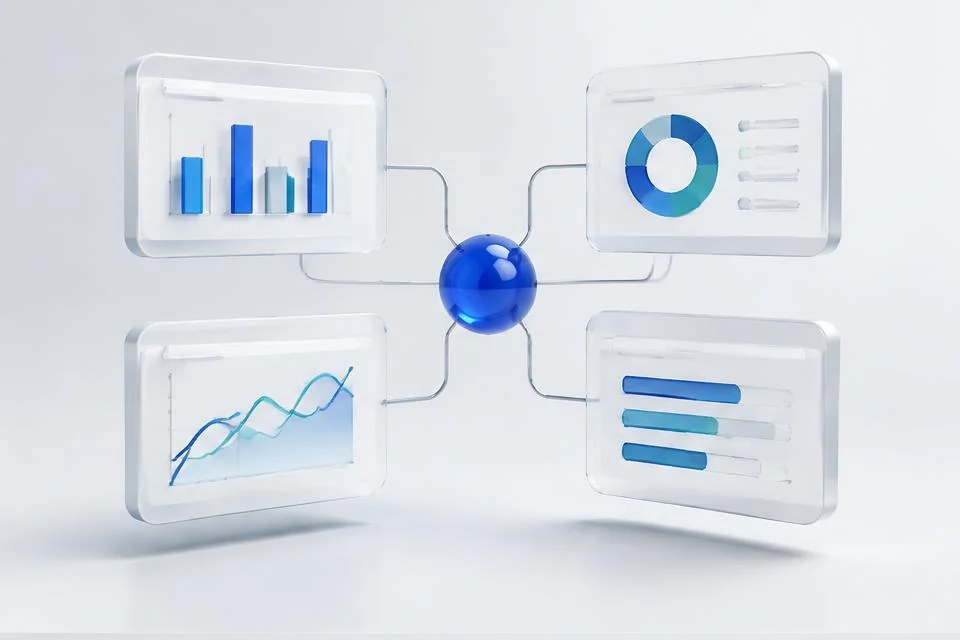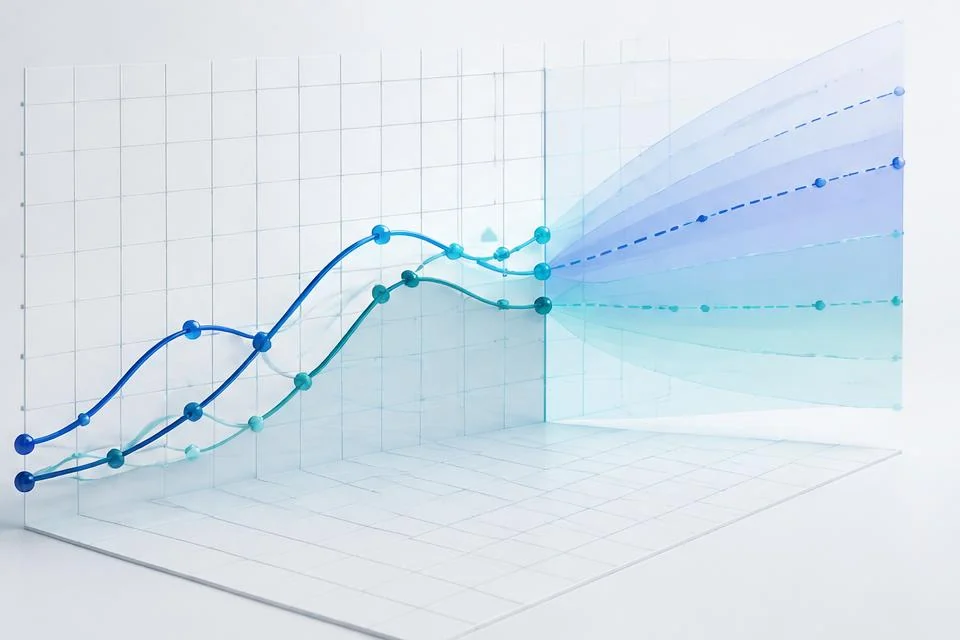

For two decades, business intelligence has meant dashboards: carefully built grids of charts that describe what happened last week, last month or last quarter. They are useful, but they leave the hardest part — interpretation — to whoever happens to be looking. AI changes where that work happens.
The interpretation gap
A dashboard can tell a sales leader that revenue fell 4% in the Midwest. It rarely says whether that drop came from fewer deals, smaller deals, a single lost account or a seasonal pattern that repeats every year.
Answering that question typically means exporting data, building a pivot table, or waiting for an analyst. By the time the answer arrives, the decision it was meant to inform has often already been made.
From describing to explaining
AI-assisted analysis closes this gap by doing the first pass of investigation automatically. When a metric moves, the system can break it down by segment, region, channel and product to surface the drivers that explain most of the change.
The output is not a replacement for judgement. It is a starting point: a short, plain-language explanation with the supporting chart, so that people spend their time deciding rather than digging.
The goal of business intelligence was never the dashboard. It was always the decision.
— Trevor Whitmore
What changes for teams
When explanations are cheap, more people ask questions. Product managers, marketers and finance leads can explore data directly instead of queuing requests. Analysts, in turn, are freed to focus on deeper, higher-value work.
The result is a shift in culture: from reviewing reports to having conversations with data.
Where analysis time goes (illustrative)
Practical recommendations
- 1Identify the five questions your team asks most often and make sure they can be answered without an analyst.
- 2Require every AI-generated insight to show the metric, filters and time range it used.
- 3Pair every automated explanation with a clear owner who decides what to do next.
- 4Measure success by time-to-decision, not by the number of dashboards built.
Conclusion
Dashboards will not disappear, but their role is changing. The most effective teams will treat them as the surface of a deeper system — one that explains, not just displays.
Trevor Whitmore
Founder, Qelvoryxa